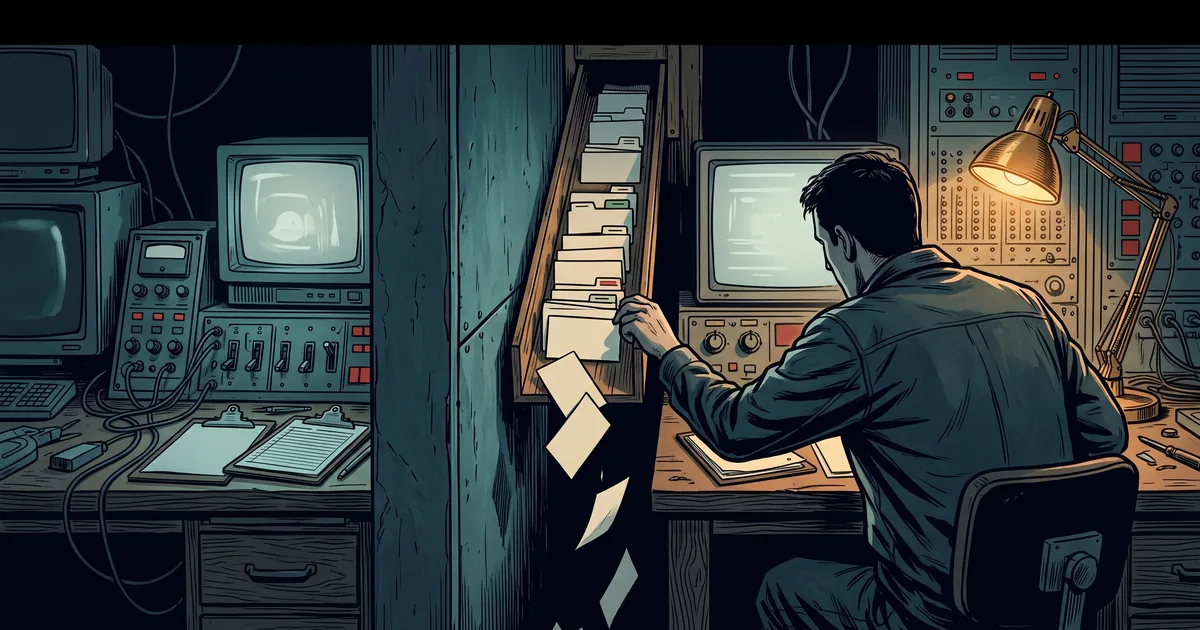
Industrial supervisory architectures evaluated as of January 31, 2014 fail when automated routines abruptly relinquish authority without transmitting operational state history to human personnel. In high-consequence control environments, software algorithms frequently process boundary telemetry in isolation, isolating personnel from the underlying physical dynamics. As research from the Chalmers Publication Library (Chalmers University of Technol demonstrates, formal representations of human-automation interaction reveal that uncoordinated control handoffs create severe operational vulnerabilities when historical telemetry is stripped during boundary transitions. When algorithmic control loops terminate unexpectedly, human supervisors inherit raw sensor volatility without the developmental context needed to choose correct interventions, transforming routine operational disturbances into critical systemic emergencies.
Why do automated managed pressure drilling handoffs trigger critical operator errors?
In complex industrial operations such as Managed Pressure Drilling, automated control loops govern downhole hydraulic pressures through rapid choke valve adjustments. An empirical investigation from NORA - Norwegian Open Research Archives establishes that incomplete contextual awareness during automated control handoffs significantly elevates operator error during critical well control events. When supervisory software detects anomalies exceeding deterministic thresholds, the system disengages automated choke regulation and forces drilling personnel to assume manual control instantly. Without visual representations of continuous parameter history, operators misinterpret transient pressure surges as formation influxes, leading to improper valve actions. Control architectures must preserve and display cumulative hydraulic trends rather than dumping static alarm values onto personnel during emergency disengagements.
How does workforce role transformation disrupt continuous supervisory situational awareness?
The progression toward autonomous industrial workflows alters the fundamental relationship between human operators and machinery. Sociotechnical analysis published in Relations industrielles emphasizes that transitioning from direct mechanical execution to passive monitoring fundamentally restructures operational responsibilities, often creating out-of-the-loop performance decrements. When operators become remote observers of autonomous processes, their mental models of operational status decay over extended periods of quiet monitoring. If an automated process encounters an unanticipated mechanical boundary, the human supervisor must rebuild operational situational awareness within seconds. Industrial systems must therefore sustain continuous operator cognitive engagement by actively tracking and visualizing machine health metrics rather than relying on binary alerting thresholds that suddenly disrupt passive supervision.
Can calibrated trust cues prevent premature human intervention during complex operations?
To prevent abrupt handoffs, interfaces between human monitors and autonomous software agents require precise calibration of operational confidence. Research in Lecture notes in computer science outlines an explicit design methodology for calibrating trust cues in cognitive agents, establishing how visual indicators can communicate system confidence before operational thresholds are breached. When software agents convey fluctuating reliability levels dynamically, operators avoid both premature interventions that override valid automation and delayed responses that allow system limits to be exceeded. Calibrated trust cues provide operators with continuous insight into algorithmic certainty, creating a gradual bridge between automated execution and manual recovery. Bridging this supervisory gap ensures that human judgment intervenes only when operational limits require human insight.
Sources
- Chalmers Publication Library (Chalmers University of Technol: Representing human-automation challenges, 2014-01-01
- NORA - Norwegian Open Research Archives: The Influence of Automation on Human Error in Managed Pressure Drilling Well Control, 2014-01-01
- Relations industrielles: Automation, evolution or revolution, 2014-01-22
- Lecture notes in computer science: A Design Methodology for Trust Cue Calibration in Cognitive Agents, 2014-01-01


