
Organizational Leadership Systems and Human Resource Triage Reshape Oversight
Balancing automated filtering with human leadership judgment preserves qualitative context across intake workflows.
raybolouriIdeas
A builder's notebook, out loud. I collect the ideas worth thinking about - mine and other people's - and turn each one into something you can actually see.
Balancing automated filtering with human leadership judgment preserves qualitative context across intake workflows.

Engineering architectures must retain contextual dynamics and human conviction when integrating automated advisory systems into operational decisions.

Uncompressed intake telemetry prevents operational bottlenecks caused by seigniorial control across complex human workflows.

Effective intake boundaries preserve intermediate reasoning steps and provenance metadata to maintain meaningful operator control.

Automated triage funnels degrade institutional judgment when intake boundaries discard operational metadata before human review.

Commercial decision pipelines fail when automated triage strips human nuance before personnel evaluate complex organizational evidence.

Direct conversational binding reduces cognitive load during parametric spatial modeling across distributed interface workflows.

Connected telemetry pipelines preserve raw contextual payloads alongside structured parameters for human oversight.

Preserving boundary telemetry inside automated cloud environments maintains human oversight and prevents severe triage latency.

Preserving raw narrative context across automated triage boundaries protects supervisory discretion and maintains operational legitimacy.

Engineering intake architectures must integrate human discretion to stop automated pipelines from stripping vital operational context.

Preserving nuanced operational evidence across automated triage interfaces protects critical human judgment from systematic automation bias.

Human intuition into algorithmic intake interfaces prevents costly context collapse across business and clinical workflows.

Automated intake systems must preserve evidentiary context to enable rigorous judicial and operational decision optimization.

Performance appraisal intake demands balanced supervisory augmentation to prevent automated pipelines from eroding evaluative context.

Automated pipelines that strip task rationale force clinical and industrial operators to reconstruct unrecorded context under severe operational.

Automated scoring pipelines strip operational context from workplace triage, eroding epistemic agency and calibrating worker trust improperly.

Premature telemetry filtering across automated intake boundaries degrades triage fidelity and impairs collaborative human oversight.

Perimeter decision gates capture intermediate judgments early to preserve contextual trust across automated systems.

Automated decision pipelines suppress essential environmental telemetry and degrade human co-reasoning across complex operational boundaries.

Deploying decision models at intake boundaries protects raw operational context, reinforcing human trust and supervisory task intervention.

Financial underwriting systems require raw qualitative context to prevent automation bias and protect human adjudicators across intake transitions.

Automated intake boundaries risk operational classification errors when ingestion pipelines strip qualitative context from human evaluators.

Clinical decision support requires explicit uncertainty calibration to prevent specialists from misinterpreting probability scores.

Automated triage pipelines degrade operational efficiency when rigid categorization strips context and hides intermediate confidence ratings.

Balancing system autonomy with operator discretion requires preserving rich contextual traces to prevent severe supervisory failure.

Automated evaluation systems require continuous contextual lineage to mitigate operator bias and maintain institutional accountability.

Automation structures fail when automated triage mechanisms strip qualitative operational background from downstream human evaluators.

Computerized administration and automated evaluation pipelines erode institutional trust when systems strip operational metadata at intake.

Robotic intake pipelines risk procedural failure unless formal verification models preserve qualitative context across workflow boundaries.

Evaluations of intake boundaries confirm that preserving explicit metadata prevents systemic noise.

Structured intake contracts across clinical rehabilitation and architecture stop automated pipelines from discarding critical domain context.

Structured automated pipelines degrade critical situational context unless human factors and modular architectures sustain cooperative triage loops.

Higher automation tiers in industrial robotics shift human moral culpability during collaborative workflows.

Decision support modes alter operator trade-offs when algorithmic triage isolates human discretion from contextual uncertainty.

Automated intake systems in enterprise management platforms degrade human discretion when narrative context disappears during escalation handoffs.

Automated systems induce deontological rigidity while human operators retain essential reasoning for nonroutine physical and ethical workplace demands.

Perceptual ambiguity amplifies automation bias while algorithmic failure triggers severe aversion in operational human decision support.

Automated diagnostic pipelines require localized explanations and preserved contextual evidence to sustain calibrated supervisory trust.

High stakes decisions require verifiable records and human discretion rather than isolated algorithmic summaries.

Preserving circumstantial metadata at intake boundaries prevents downstream diagnostic friction across automated decision pipelines.

Deploying automated triage systems strips essential physical telemetry and situational provenance needed for sound human supervisory judgment.

Data triage strips vital operational context from downstream administrators facing high stakes adjudications.

Standardizing clinical triage and credit management intake requires preserving narrative context to prevent downstream heuristic shortcuts.

Automated systems compromise operational safety when early intake filters discard clinician intent and enterprise workflow rationale.

Enterprise decision systems require deliberate friction to prevent human managers from uncritically deferring to automated recommendations.

Deploying algorithmic advice without preserved qualitative case narratives distorts frontline administrative discretion across operational agencies.

Uncalibrated automated intake schemas discard qualitative signals, forcing human evaluators to reconstruct critical operational context.

Automated intake systems that truncate transaction records undermine human judgment and induce severe operator aversion.

Industrialised building systems and robotic process automation reveal that uncoordinated operational interfaces degrade overall productivity.

Supervisory reliability fractures when automated multi-agent systems truncate context telemetry during dynamic operational handoffs.

Automated intake filters degrade human oversight by stripping operational cues, forcing downstream teams into reactive verification routines.

Systemic software adjustments and calibrated agent autonomy eliminate operational friction far more reliably than retraining personnel.

Enterprise architectures must balance algorithmic authority and human oversight to prevent context loss across administrative workflows.

When automated intake strips situational nuance, frontline operators in public administration and marine architectures suffer severe judgment errors.

Preserving raw perceptual cues and bidirectional context enables human operators to govern automated systems without sacrificing decision efficiency.

Preserving unparsed intake evidence prevents operational context loss across administrative workflows and security incident triage.

Automated intake systems erode operational context, demanding architectures that preserve raw observations for human specialists.

Disciplined managerial collaboration preserves essential operational context across automated enterprise dispatch systems.

Rigid intake rules strip operational nuance across audit sampling and clinical workflow environments before specialists intervene.

Algorithmic candidate screening compromises evaluative fairness when qualitative signals collapse into discrete scores.

Coupling artificial intelligence decision support with reflective justification protocols prevents triage errors in institutional review.

Fragmented task queues sever human operators from environmental cues required for sound evaluative judgments.

Empirical analysis reveals that preserving sensory cues and bounded confidence intervals protects expert diagnostic accuracy.

Standardized assessment models in protective services risk flattening critical qualitative cues unless systems preserve frontline practitioner judgment.

Stewardship reporting codes and sequential dilemmas fundamentally alter how evaluators interpret negative organizational signals.

Administrative intake quantification degrades casework accuracy unless human-centered decision architectures preserve qualitative narrative payloads.

Patient trust demands verified diagnostic superiority while clinical intake workflows balance procedural norms against automated recommendations.

Industrial cobots require interactive dialogue and causal telemetry to prevent cognitive overload during sudden operational handoffs.

Automated workflows induce silent omission errors when stripped sensory telemetry blinds human supervisory judgment across operational boundaries.

Structured interpreters and procedural legal safeguards preserve critical context during complex supervisory transitions.

Comparative intake framing and preserved contextual cues safeguard human evaluative judgment across complex organizational triage workflows.

Context loss during automated intake accelerates auditor ego depletion and degrades complex operational evaluation.

Preserving sequential cognitive state histories prevents sunk cost distortion across supervisory human and machine interactions.

Preserving multi-cue telemetry across operational handoffs protects diagnostic judgment in collaborative workflows.

Knowledge based automation requires qualitative human feedback and deliberate cognitive reflection to prevent dangerous supervisory isolation.

Localizing automated judgment at the human joint boundary and industrial welding interface preserves continuous operational context.

Preserving immediate operational context at intake boundaries safeguards human supervisory stability against triage latency and memory degradation.

Algorithmic occlusion judgment and somatic electrodermal signals preserve vital supervisory context when automated filtering strips diagnostic cues.

Truncated intake cues trigger cognitive priming and monotonicity violations that degrade human financial choices.

Structured intake pipelines must preserve operational context and intent history across automated handoffs to protect operator situation awareness.

Algorithmic advice appreciation alters organizational intake protocols while uncritical reliance magnifies systemic decision errors across policy.

Visual cues and quantitative measurement uncertainty thresholds protect human operator judgment across critical automation handoffs.

Rigid intake schemas strip crucial context and trap human managers in nominal supervisory loops.

Rigid upstream categorization strips operational context before human evaluators receive records, causing systematic downstream misclassifications.

Structured cognitive training and institutional execution benchmarks preserve critical diagnostic context across complex evidentiary handoffs.

Supervisory control architectures encounter acute failures when intake pipelines strip continuous telemetry before human interventions.

Automated intake systems compromise procedural fairness and analyst trust when boundary filters discard qualitative applicant narratives.

Automated intake routines erode deliberation when rigid schemas strip circumstantial context before human operators evaluate multi-step workflows.

Coupled decision models and transparent motion planning safeguard operator tolerance across complex robotic environments.

Autonomous pipelines misclassify structural anomalies without human diagnostic frameworks to interpret systemic edge cases.

Automated screening workflows require rich diagnostic telemetry to preserve human oversight and prevent operational failures.

Automated wayfinding interfaces and multi-level detection systems demand raw environmental telemetry directly at incident triage boundaries.

Automating intake boundaries strips contextual legal signals and meteorological telemetry necessary for operational human discernment.

Automated intake mechanisms strip sensor telemetry during Emergency Disconnect sequences, isolating operators from critical physical baselines.

Automated pricing systems erode administrative judgment when computational pipelines compress commercial context.

Operational safety depends on preserving human discretion and tracking fidelity when automated screening pipelines compress critical decision evidence.

Automated intake pipelines degrade operational safety when quantitative models discard qualitative human context during complex incident sequences.

Preserving raw contextual telemetry within enterprise architectures safeguards human predictive judgment across automated decision tasks.

Automated screening pipelines lose operational value when triage metadata and algorithmic rationales fail to reach human evaluators.

Autonomous marine risk models demonstrate that supervisory context prevents operational failures across robotic boundaries.

Retaining raw operational telemetry across automated risk screening boundaries preserves human supervisory performance during urgent interventions.

Complex industrial control architectures fail when automated filters strip physical telemetry before routing alerts to human supervisors.

Supervisory automation requires continuous operational telemetry to preserve operator accuracy and human reliability during critical interventions.

Rigid flight deck policies fail when automated systems discard continuous contextual parameters across complex operational transitions.

Integrating soft consensus matrices and neural network error models preserves operational context across reporting layers.

Automated intake pipelines strip diagnostic nuances from clinical decision support unless system boundaries preserve patient telemetry.

Supervisory interfaces require transparent operational records to preserve operator trust and prevent critical control failures.

Early assembly planning and high-stakes robotics prove that automated filtering strips vital operational cues from human operators.

Automated network systems degrade operational resilience when ingestion pipelines discard boundary telemetry required for supervisory decision quality.

Operating complex intake systems requires preserving human cognitive context to prevent catastrophic automation failures across digital infrastructure.

Automated ethical decision tools must couple computable collision metrics with timely performance warnings.

Algorithmic transfers fail across industrial plants when automated pipelines disregard operational stopping rules and human context.

Preserving multi-layered parameter telemetry prevents critical decision bottlenecks in automated sensor triage architectures.

Preserving raw environmental signals and neural cognitive telemetry prevents brittle supervisory failures across complex intake pipelines.

Retaining algorithmic provenance and visual decision history stabilizes expert human supervisory interventions across automated systems.

Unattended transit dispatchers need raw operational cues alongside algorithmic rules to maintain intuitive intervention capabilities during emergencies.

Preserving raw contextual telemetry across automated intake boundaries prevents cognitive disorientation during critical supervisory handoffs.

Marine automation architectures and safety decision support systems require contextual fidelity to prevent operator workload spikes during handoffs.

Designers must coordinate automated system planning with behavioral choice architecture to prevent systemic judgment failures.

Automated schema filters strip critical cultural framing and neural associative cues needed for human decision making.

Premature confidence intervals and volatile risk thresholds undermine automated boundary handoffs without continuous environmental estimation.

Local decision architectures retain raw signal telemetry and spatial vectors before centralized arbitration filters degrade critical operational.

Automation systems prevent cascading execution failures when cognitive maps preserve upstream operational context for human operators.

Preserving operational context across discrete trajectory routing and job-shop boundaries prevents human reliability failures.

Industrial safety systems fail when automated intake schemas discard the qualitative human context needed for critical procedural workflows.

Supervisory decision support systems require transparent evidentiary provenance to prevent operator fatigue and hidden failures.

Automated intake schemas degrade cataloging discovery and place excessive cognitive burdens on executive leaders.

Telecommunications workflows and flight operations show that premature intake rules discard ambient context and degrade human situational awareness.

Retaining operational telemetry at intake boundaries preserves situational awareness across semi-autonomous systems.

Technical architectures and continuous lifecycle governance prevent severe contextual degradation across complex operational handoffs.

Decoupled automation architectures degrade manual operator intervention when upstream telemetry pruning hides raw system states.

Complex automation architectures degrade manual operator intervention when automated intake mechanisms discard essential operational state.

Structured semantic ontologies and modular manufacturing boundaries prevent context loss across human and automated operational handoffs.

Preserving operational telemetry across automated queue boundaries prevents triage failures in complex test and trading architectures.

Automated verification of agent logic and multi criteria structural models preserve operational context during supervisory handoffs.

Preserving contextual boundaries between automated dispatch and human judgment protects operational agency across complex computing architectures.

Automated intake filtering strips critical operational context before human specialists can diagnose anomalous system alerts.

Marine Corps planning automation and robotic autonomy frameworks fail when premature triage strips qualitative narrative context.

Rigorous measurement calibration preserves essential operational context across automated flight and clinical decision boundaries.

Preserving temporal horizons and graded autonomy benchmarks protects human supervisory awareness from reductive algorithmic filters.

Autonomous supervisory architectures must maintain continuous telemetry to prevent catastrophic handoff failures during emergency intervention.

Engineering automation and decision support systems require contextual boundaries to prevent systemic information loss.

Industrial automation handoffs trigger operator error when systems strip continuous parameter history and calibrated trust cues during well control.

Coupled sensory streams and synergistic flight deck architectures preserve vital operator rationale across automated intake boundaries.

Consolidating multimodal telemetry and organizational safety culture prevents operator context fragmentation during sudden industrial disturbances.

Automated decision management systems require structured scenario frameworks and verbal validation to preserve operator context across operational.

Distributed multi-agent systems require explicit fuzzy criteria to prevent operational cognitive dissonance during supervisory escalation.

Effective supervisory architectures preserve operator intervention boundaries when automated systems confront complex operational anomalies.

Coupling rotorcraft drive synthesis with early decision models prevents severe information loss across complex engineering intake interfaces.

Mission constraints across supervisory boundaries prevents cognitive fragmentation in automated scheduling environments.

Preserving environmental context across automation boundaries protects human supervisory judgment and accelerates incident recovery.

Rigorous formal verification shows that isolating operational context impairs supervisory decision support across facility workflows.

Retaining raw multi-variable environmental telemetry across intake boundaries prevents destructive parameter reduction in supervisory systems.

Preserving raw contextual telemetry prevents human supervisory control failures when automated smoothing routines mask sensor variance.

Neglecting sociotechnical coordination and liability allocation in automated work design shifts severe operational burdens onto human operators.

Automated intake systems must transmit granular environmental telemetry alongside alerts to preserve human supervisory judgment.

Clinical workflow coordination breaks down when automated architectures discard narrative records before human operational intent can guide decisions.

Clinical decision support systems maintain evidentiary depth when adaptive rule engines preserve diagnostic context.

High automation levels impair operator situation awareness when interfaces fail to present actionable recommendations directly during supervisory tasks.

Ontology models and supervisory neural processing prove that automated intake must preserve relational context for operators.

Aviation flight decks and ecological interfaces reveal that stripping operational context degrades supervisory performance.

Automated decision support interfaces distort supervisory judgment when computational filters isolate mutually dependent evaluation criteria.

Preserving multidimensional criteria across engineering boundaries prevents automated intake systems from discarding critical operator context.

Rigid intake fields strip vital diagnostic narrative, compelling clinical systems to balance structured documentation with human factors engineering.

Preserving human agency in automated workflows requires continuous causal feedback and transparent decision boundaries.

Automated advisory systems must bind numeric sensor streams to human supervisory intent to preserve operational continuity across sector handoffs.

Establishing principled design frameworks preserves human judgment and prevents dangerous automation bias across complex operational systems.

Coupling knowledge management models with quantitative metrics preserves operational context across automated supervisory handoffs.

Maintaining intermediate operational telemetry protects human judgment when automated scoring systems fail.

Enterprise decision architectures require rich context to sustain human and automated coordination.

Algorithmic decision support degrades when automated intake strips operational context before human operators evaluate uncertain evidence.

Cognitive architectures and credal networks demonstrate that premature classification discards contextual relationships before human evaluation.

Retaining fuzzy fault tree states and process accountability protocols preserves vital operational telemetry across complex system boundaries.

Establishing sampling boundaries and measuring signal discrimination indices protect sequential expert reviews from cognitive distortion.

Preserving contextual provenance across automated interfaces prevents operator judgment failures during critical supervisory handoffs.

Standard supervisory interfaces must combine dual-criterion data filtering with psychometric inventories to preserve operator diagnostic discretion.

Environmental monitoring and decision support systems require structured linguistic protocols to mitigate cognitive bias and interface distortion.

Collective deliberation and transparent logs protect decisional confidence when automated intake pipelines strip qualitative context.

Automated triage requires preserving classification confidence scores and complete telemetry records across human review boundaries.

Structured debiasing and formal decision styles prevent operators from imposing premature certainty on volatile operational assessments.

Restricting intake telemetry triggers cognitive tunnel vision in executive evaluation while isolating unaided probability estimation.

Supervisory override standards must preserve continuous environmental telemetry to protect human judgment during critical unmanned aircraft handoffs.

Resilient control architectures fail when automated transfers strip diagnostic history before human intervention begins.

Temporal frequency encoding and recurrent winner allocation alter human risk evaluation within automation control loops.

Hierarchical decision trees and partitioned control boundaries protect diagnostic telemetry when selective recognition heuristics discard secondary cues.

Autonomous supervisory control requires fuzzy discrete event models and stochastic dominance to prevent catastrophic context loss.

Automated administrative triage fails when operational visualization systems sever narrative provenance from quantitative indicators.

Structured boundary advisors prevent procurement evaluation distortions caused by temporal discounting and inappropriate triage procedures.

Markov aerospace modeling and clinical gait analysis show that compressed summary metrics strip vital operational context.

Automated heuristics obscure individual human choice strategies unless supervisory architectures preserve multi-attribute decision data.

Complex decision support pipelines fail when automated routing agents discard situational parameters required for human supervisory oversight.

Isolating clinical screening from contextual dialectical deliberation degrades distributive allocation decisions across operational human supervisory.

Automated intake boundaries discard essential context and increase cognitive burdens across operational workflows.

Preserving contextual signals at operational boundaries enables mathematical estimation models to reinforce supervisory judgment without loss.

Supervisory automation interface architectures prevent operator errors when system feedback preserves operational context.

Enterprise XML transport schemas prevent post decision factual distortion when operators conduct deliberate multi-attribute logistics triage.

Premature automated intake destroys administrative nuance across complex procurement and aviation environments.

Operator trust collapses when automated intake pipelines strip qualitative context from supervisory decision systems.

Supervisory control degrades when automated interfaces discard intermediate state telemetry during transitions between automated algorithms and human.

Stripping boundary metadata during intake forces diagnostic teams to reconstruct dropped packet attributes.

Retaining dissimilar advisor inputs and empirical correspondence protects engineering intake systems from premature coherence failures.

Serial evaluation biases and task technology fit dictate clinician performance when mobile diagnostic interfaces mediate complex risk assessments.

Discarding boundary protocol headers creates irreversible latency and categorization errors across distributed operational endpoints.

Formal elicitation protocols protect industrial decision models from uncalibrated heuristics and distorted operational assumptions.

Automated intake boundaries create artificial confidence while stripping the multivariate context human operators need to verify complex infrastructure.

Preserving sequential context through fuzzy complementary matrices prevents systematic judgment errors.

Rigorous architectural human views and bounded transmission protocols protect supervisory operators from automation bias during critical anomalies.

Automated safety assessments fail when deterministic decision filters strip operational context needed for supervisory judgment.

Preserving bounded evaluation ranges and contextual premises prevents catastrophic categorization errors across automated triage pipelines.

Preserving behavioral context and incomplete fuzzy judgment matrices prevents catastrophic errors across decentralized operational architectures.

Explicit value models and supervised agent classifiers preserve operational context across distributed decision support boundaries.

Automated intake pipelines degrade operational coordination when system architectures discard relational and spatial context.

Hospital triage software degrades clinical accuracy when rigid automation strips qualitative observational cues from diagnostic records.

Evaluative intake into isolated sub-problems destabilizes collective judgments across organizational decision support systems.

Preserving qualitative incident context prevents severe evaluation errors caused by abstract intake schemas.

Automated interfaces in urban supervisory systems and enterprise architectures compromise human oversight by stripping operational telemetry.

Standardized intake pipelines degrade critical situational knowledge across clinical safety networks and interactive autonomous robotics.

Mathematical cones and collaborative interfaces retain multi-attribute criteria before automated systems discard qualitative operational intent.

Automated routing engines and lateral driver support systems require shared state schemas to prevent supervisory control failures.

Activity Theory frameworks show that automated Decision Aids fail when records lose institutional context during operational handoffs.

Mobile service robots and adaptive controllers require continuous telemetry to prevent supervisory failures in automated building environments.

Automating raw physical intake discards vital contextual variance unless policy architectures preserve human supervisory discretion across boundaries.

Neurocognitive monitors and mathematical actuator models prevent catastrophic errors across automated boundaries.

Algorithmic forecasting models require qualitative human context and closed feedback loops to prevent critical operational failures.

Automated pathology systems degrade diagnostic accuracy when mechanical intake strips qualitative physician notes during specimen handoffs.

Preserving intact operational telemetry protects human judgment from systemic failures in complex supervisory environments.

Supervisory command systems maintain situational awareness only when interfaces preserve contextual intent and foster continuous operator engagement.

Petrochemical planning architectures fail when automated solvers discard operational constraints before human dispatchers review schedules.

Stripping environmental context during automated intake inflates human verification overhead and degrades reliable system design.

Rigid computerized order entry rules compromise clinical decision support by causing alert fatigue.

Autonomous system architectures fail when automated task allocation isolates supervisors from dynamic flight telemetry.

Clinical guidelines and cognitive support tools fail during acute crises when rigid protocols strip operational context.

Tactile evaluation frameworks and agile manufacturing targets preserve physical operational parameters during early engineering assessment.

Isolating predictive control models from peripheral telemetry leaves downstream human operators unable to validate critical water management decisions.

Clinical software succeeds only when technical compliance safeguards unstructured patient narratives instead of forcing rigid documentation.

Dynamic operational architectures fail when intake boundaries strip contextual nuances from complex workflows.

Statistical judgment models show that premature classification strips critical context during supervisory handoffs and tactical control operations.

Deploying handheld triage tools requires unparsed observational notes alongside vital signs to prevent severe diagnostic errors at remote outposts.

When Western Union's telegram service ended, the news arrived in February 2006 as a few lines on a web page.

Rigorous evaluation matrices and intact spatial cues enable human supervisors to steer planetary robotics without cognitive overload.
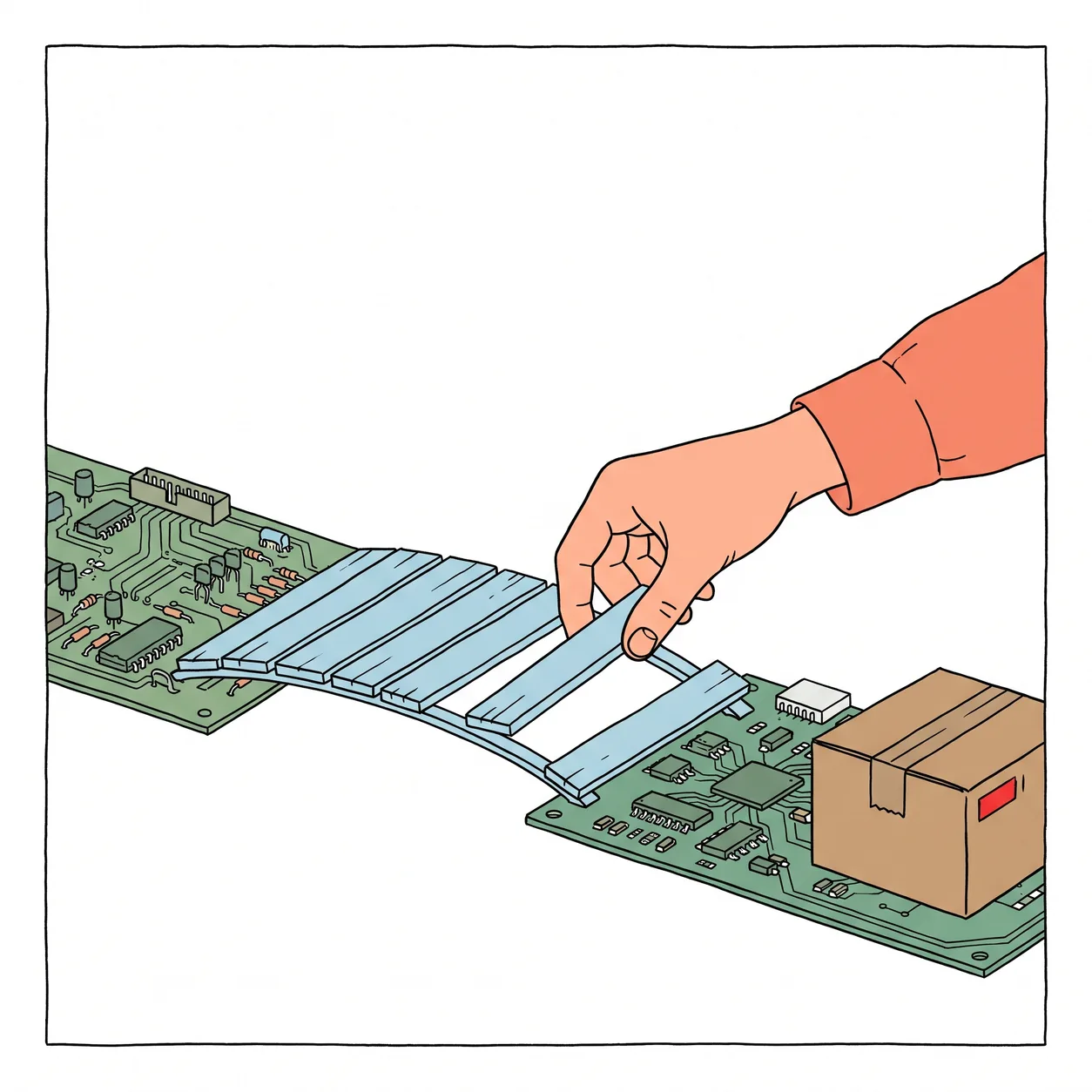
In January 2006, Apple's move to Intel stopped being a plan and became something people could order.
I only post ideas I actually think about. Some are mine. Many belong to builders I follow on LinkedIn and X.
When an idea is someone else's, I keep it in their words, put their name on it, and link straight to the source.
Then every idea runs through the system I built and comes out with its own illustration. Watch it happen - each one starts as raw text and takes form.
I've spent forty years asking "how" - from writing a word processor in assembly at eleven, to running an ISP off the 99th floor of the Sears Tower, to shipping the first bidirectional business texting a year before the iPhone, to building voice and agentic AI today. This is where I keep the questions worth asking.
Read the ReadmeOne idea, cast and illustrated, sent only when there's one worth your attention. No cadence, no filler.
A curated publication where Ray Bolouri shares ideas worth thinking about - his own and credited ideas from other builders - each given its own illustration.
No. Many are ideas he found compelling from others on LinkedIn or X. Those are reshared in their original words, credited by name, and linked to the source.
So each idea is something you can see and remember, not just another line in a scroll. It also reflects Ray's habit of building his own tools.